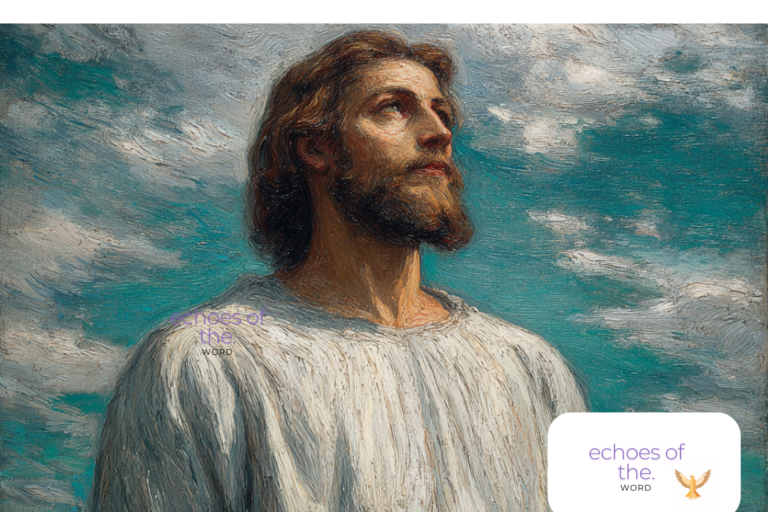
The Divine “I Am”: Unveiling Jesus’ Identity in John 7
The Gospel of John is a tapestry woven with profound theological declarations, and chapter 7 is a particularly rich thread. As Jesus navigates the tumultuous Feast of Tabernacles in Jerusalem, he doesn’t simply preach; he declares his very essence. These powerful “I Am” statements, scattered like luminous pearls throughout the narrative, are not mere pronouncements but invitations to understand a truth that has resonated through millennia, impacting countless lives and shaping the landscape of religion. They are the bedrock of Christian faith, offering a profound glimpse into who Jesus claimed to be and what that means for us today.
John 7 presents a fascinating interplay between Jesus’ public ministry and the escalating opposition he faces. Amidst the crowds, the questioning, and the outright hostility, Jesus consistently and unapologetically reveals his divine nature. These “I Am” statements are not abstract theological doctrines; they are rooted in the lived experience of Jesus and are designed to illuminate his purpose, his authority, and his intimate relationship with God the Father. Understanding these declarations is crucial for anyone seeking to grasp the core message of Christianity and its enduring relevance.
The Feast of Tabernacles and the Unveiling of Truth
The Feast of Tabernacles, a celebration commemorating Israel’s wanderings in the wilderness, was a time of rejoicing, remembrance, and looking forward to God’s provision. It was a festival steeped in symbolism, and Jesus masterfully weaves himself into its fabric, revealing himself as the ultimate fulfillment of its meaning. His presence at the feast, despite the danger, highlights his unwavering commitment to fulfilling his mission.
During this vibrant festival, where water was poured out as a symbol of God’s refreshing presence and the light of the Temple Menorah illuminated the night, Jesus elevates the spiritual significance of these practices. He stands in the midst of it all, a living embodiment of the very promises the feast celebrated. The crowds are abuzz with speculation, some believing, others doubting, but Jesus seizes the moment to offer a radical redefinition of what true sustenance and divine presence truly mean.
“I Am the Light of the World” – Dispelling Spiritual Darkness
One of the most striking declarations in John 7, though it technically follows the feast in chapter 8, is Jesus’ profound assertion: “I am the light of the world.” This statement, delivered amidst the shadows of doubt and spiritual ignorance that permeated the religious landscape, is a direct counterpoint to the darkness that humanity often finds itself in. Just as the sun banishes the night, Jesus claims to illuminate the path to truth and salvation, offering clarity in a world often shrouded in confusion and despair.
Consider the experience of being lost in a dense fog. Everything is unclear, disorienting, and perhaps even frightening. Jesus’ declaration is like the fog lifting, revealing a clear and unmistakable path forward. He doesn’t just offer a map; he is the light that guides you. This “I Am” statement speaks to his ability to reveal God’s nature, to expose sin, and to lead us into a relationship with the divine, transforming our understanding and our lives. The religious implications are immense: he positions himself as the ultimate source of spiritual illumination, the one from whom all true understanding of God originates.
Later in the Gospel, Jesus declares, “I am the bread of life.” This statement, born from the miracle of feeding the five thousand, takes on a deeper meaning beyond physical nourishment. In the context of John 7, where the people are seeking a tangible Messiah, Jesus points to a spiritual hunger that only he can satisfy. He offers sustenance that transcends earthly needs, providing an eternal and fulfilling nourishment for the soul.
Think About how a delicious meal can satisfy a gnawing hunger, leaving you feeling content and energized. Jesus offers a spiritual equivalent, but one that never runs out. He is the essential provision for our deepest spiritual longings. This “I Am” statement is a powerful invitation to rely on him not just for a fleeting moment, but for continuous spiritual sustenance. The religious significance lies in his claim to be the sole provider of eternal life and well-being, the very food that nourishes our connection with God.
Jesus’ Authority and the “I Am” Declarations
The “I Am” statements in John 7 are not just About Jesus’ identity; they are also profound declarations of his divine authority. He consistently challenges the assumptions and expectations of his contemporaries, revealing a power and a knowledge that far surpasses human understanding. These pronouncements are woven into the narrative of his interactions, often arising in response to questions, accusations, or the very atmosphere of disbelief surrounding him.
His willingness to make these bold claims, especially in the face of escalating opposition, underscores his absolute confidence in his divine commission. He knows who he is, and he is unafraid to declare it, even when it leads to greater confrontation. This unwavering self-assurance is a hallmark of his ministry and a testament to the truth of his claims.
“I Am Not From This World” – A Heavenly Origin
In John 7:23, Jesus declares, “I am not from this world.” This statement is crucial for understanding the context of his divine claims. It immediately sets him apart from all other human beings and asserts a heavenly origin. He is not merely a prophet or a teacher, but someone whose very being originates from God. This declaration challenges the limited perspectives of those who are trying to understand him based solely on earthly criteria.
Imagine a visitor from another planet, possessing knowledge and abilities far beyond our own. Jesus’ statement hints at a similar transcendence. He operates on a different plane of existence, one that is intrinsically connected to the divine realm. This transcendent nature is what allows him to make the other “I Am” statements with such authority. His religious role is elevated from a human leader to a divine emissary.
“I Am He” – The Unveiling of the Divine Name
When the temple guards are sent to arrest Jesus and return empty-handed, they are questioned by the chief priests and Pharisees. Their response is telling: “Never has anyone spoken like this man.” This awe-struck admission hints at the profound impact of Jesus’ words, particularly when he subtly hints at his divine identity. Later, when questioned by the crowds About whether he is the Messiah, Jesus responds with a powerful, albeit indirect, “I am He.” This echoes God’s revelation to Moses in Exodus 3:14, where God says, “I AM WHO I AM.”
This is not a casual assertion; it’s a deliberate unveiling of the divine name, a claim to identify himself with the God of Israel. It’s a statement of ultimate being, of self-existence, and of divine power. The religious weight of this declaration is immense, as it directly links Jesus to the eternal God. It’s a claim that demands a response, forcing people to confront his true identity.
The Impact of the “I Am” Statements on Faith and Religion
The “I Am” statements in John 7 and the surrounding chapters are not mere historical curiosities; they are the very cornerstones of Christian faith and practice. They provide the essential framework for understanding Jesus’ mission, his salvific work, and the nature of our relationship with God. These declarations have shaped theological discourse, inspired countless hymns and prayers, and guided individuals on their spiritual journeys for centuries.
These pronouncements are more than just theological points to be debated; they are transformative truths that call for a personal response. They invite us to move beyond intellectual assent and to embrace Jesus as the fulfillment of our deepest needs and the ultimate source of our spiritual life. The religious implications extend to every aspect of how believers understand God, salvation, and their purpose in the world.
“I Am the Good Shepherd” – Leading and Protecting Believers
Though also found in chapter 10, the concept of Jesus as the shepherd is implicitly present in John 7, where he navigates the crowds and seeks to lead them to truth. The declaration, “I am the good shepherd,” signifies his active care, guidance, and protection for those who follow him. A shepherd knows his sheep intimately, leads them to pasture, and defends them from danger. Jesus embodies this role perfectly, offering not just spiritual direction but also unwavering security.
Imagine a lost sheep, vulnerable and alone. The shepherd’s arrival brings immediate relief and safety. Jesus offers this same profound sense of divine reassurance. He doesn’t just point the way; he walks with us, guiding us through life’s challenges and protecting us from spiritual harm. This shepherding role is fundamental to the religious experience of finding solace and direction in faith.
“I Am the Resurrection and the Life” – Offering Eternal Hope
Perhaps one of the most comforting and powerful “I Am” statements, also found later in John, is “I am the resurrection and the life.” This declaration offers ultimate hope and victory over death. It asserts Jesus’ power not only to provide spiritual life now but also to grant eternal life beyond the grave. This is a message that has resonated with millions, offering solace in times of grief and a profound anticipation of eternity.
When faced with the finality of death, human hope can seem fragile. Jesus’ declaration shatters that fragility, offering a guarantee of future life and a present reality of spiritual vitality. He doesn’t just speak About resurrection; he is the force behind it. This eschatological promise forms a core tenet of religious belief, providing a powerful counterpoint to the perceived inevitability of death.
In conclusion, the “I Am” statements woven into the narrative of John 7 and the surrounding chapters are far more than mere theological pronouncements. They are divine self-disclosures, revealing the very essence of Jesus Christ. From his role as the light of the world and the bread of life, to his claim of a heavenly origin and his identification with the divine name “I Am He,” Jesus consistently points to his unique and authoritative identity. These declarations call us to a deeper understanding of his mission and to a personal embrace of the good shepherd who leads us and the resurrection and life that awaits us. The enduring power of these statements lies in their ability to transform lives, offering spiritual sustenance, divine guidance, and eternal hope to all who dare to believe.
Gospel of John: “I Am” Statements in Chapter 7
What are the “I Am” statements in John chapter 7?
In John chapter 7, Jesus makes several significant “I Am” statements that reveal His divine identity. These include:
“I am the bread of life” (John 7:35) – This statement, though spoken in chapter 6, is often discussed in relation to the themes present in chapter 7, implying Jesus is the spiritual sustenance and fulfillment for humanity.
“I am the light of the world” (John 8:12, but the concept is foreshadowed in John 7:46 where the temple guards say, “No one ever spoke like this man.”) – This points to Jesus as the source of spiritual understanding and truth, dispelling spiritual darkness.
“I am the good shepherd” (John 10:11, also a theme of guidance and care relatable to Jesus’ teachings in chapter 7). – This highlights Jesus’ role as protector, guide, and provider for His followers.
What is the religious significance of these “I Am” statements?
These “I Am” statements are profoundly significant in Christianity. They are direct claims to divinity, echoing God’s self-revelation to Moses as “I AM WHO I AM” (Exodus 3:14). By using this phrase, Jesus is equating Himself with God. These statements declare Jesus as:
The ultimate source of spiritual life and sustenance.
The revealer of truth and the dispeller of spiritual ignorance.
The one who provides guidance, protection, and eternal care for believers.
In essence, these declarations are central to the Christian understanding of Jesus’ identity and His role in salvation. They are not mere metaphors but assertions of His divine nature and purpose.