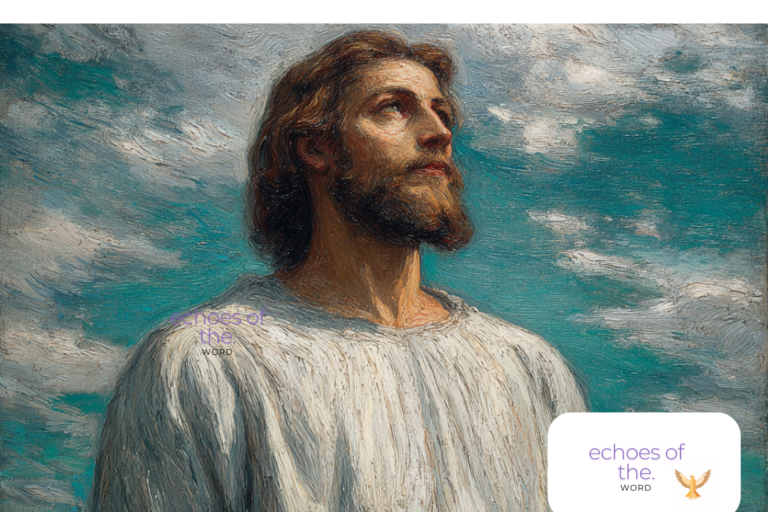
The Sermon on the Mount: A Timeless Blueprint for a Meaningful Religious Life
In the vast landscape of religious teachings, few passages resonate as deeply and universally as Jesus’ Sermon on the Mount. It’s not just a collection of moral precepts; it feels more like a profound operating manual for the soul, offering a counter-cultural vision for how to live a life aligned with divine principles. For anyone seeking a richer, more authentic religious experience, understanding and engaging with this foundational discourse is not just beneficial, it’s transformative. This article aims to unpack the Sermon on the Mount outline, not as a dry academic exercise, but as a practical guide to navigating the complexities of faith and life in a way that is both personally fulfilling and outwardly impactful.
Often delivered on a mountainside, a symbolic location implying a heightened perspective and a divine revelation, the Sermon on the Mount continues to challenge and inspire millions. Its teachings are radical, revolutionary, and remarkably relevant even two millennia later. We’ll explore its core components, not just listing them, but delving into their meaning, implications, and practical application for our daily religious journeys. Think of this as an invitation to revisit these well-known words with fresh eyes, discovering new layers of wisdom and encouragement.
Understanding the Sermon on the Mount: More Than Just Rules
Before diving into a specific Sermon on the Mount outline, it’s crucial to grasp the underlying spirit of Jesus’ teachings. He wasn’t advocating for a rigid set of rules to earn divine favor. Instead, he was presenting a qualitatively different way of living, one characterized by inner transformation and outward acts of love and compassion. This sermon is less About “do this” and “don’t do that” in a superficial sense, and more About cultivating a heart posture that naturally leads to righteous living. It’s About internalizing divine values rather than merely conforming to external expectations, fostering a genuine connection with God and humanity.
The revolutionary aspect lies in its emphasis on the internal over the external. Jesus often points to the motivations behind our actions, suggesting that a pure heart is the wellspring of true righteousness. This means that judging others harshly, harboring lustful thoughts, or performing acts of piety for show are all seen as falling short of the kingdom’s standards. The Sermon on the Mount outline therefore serves as a diagnostic tool, helping us examine the depth of our commitment to faith and the authenticity of our religious practice. It challenges us to consider not just what we do, but why we do it, and what that reveals About our inner spiritual landscape.
The Beatitudes: The Foundation of Blessedness
The Sermon begins with the Beatitudes, a series of pronouncements that redefine who is truly blessed and fortunate in the eyes of God. These are not About worldly success or conventional achievements. Instead, Jesus blesses the poor in spirit, those who recognize their utter dependence on God. He blesses the mourners, those who grieve over sin and suffering, both their own and the world’s. He blesses the meek, those who are gentle and humble, not easily provoked to anger or aggression. This initial part of the Sermon on the Mount outline sets a profound tone, indicating that true blessedness is found in humility, compassion, and a deep reliance on divine grace.
Consider the example of someone who is constantly striving for more promotions, more possessions, and more recognition, yet feels perpetually anxious and unfulfilled. Jesus’ Beatitudes suggest that true joy and peace don’t come from accumulation, but from a spiritual disposition. Blessed are the peacemakers, those who actively work to reconcile differences and foster harmony. Blessed are those who hunger and thirst for righteousness, a deep, abiding desire for moral and spiritual uprightness. These are not passive states but active pursuits, demonstrating a commitment to living in alignment with God’s will. The Beatitudes are the cornerstone of the Sermon on the Mount outline, laying the groundwork for a radically different understanding of flourishing.
Salt and Light: The Believer’s Role in the World
Following the Beatitudes, Jesus famously declares his followers to be the “salt of the earth” and the “light of the world.” This section of the Sermon on the Mount outline speaks to the active discipleship and the outward impact expected of believers. Salt, in ancient times, was not just a seasoning; it was a preservative, preventing decay and corruption. Light pierces darkness, revealing what is hidden and guiding those who are lost. This implies that followers of Christ are meant to influence their surroundings positively, to preserve goodness and to illuminate truth in a world often characterized by moral compromise and spiritual confusion.
Imagine a community grappling with widespread dishonesty and a lack of integrity. The call to be “salt” means believers are called to be agents of moral integrity, to stand against corruption, and to preserve what is good and true. Similarly, being “light” means shining forth the love, truth, and grace of God in our actions and words. If our faith doesn’t manifest in a way that positively impacts the world around us, if it remains purely an internal affair, then, as Jesus warns, its “saltiness” is lost, and it becomes worthless. This is a powerful call to action, urging us to live out our faith in tangible ways, making a real difference in the lives of others.
Jesus’ Teachings on the Law: Fulfillment, Not Abolition
A significant portion of the Sermon on the Mount addresses Jesus’ relationship with the Old Testament Law. He states emphatically, “Do not think that I have come to abolish the Law or the Prophets; I have not come to abolish them but to fulfill them.” This is a crucial element of the Sermon on the Mount outline, dispelling any notion that he was introducing a completely new and contradictory set of rules. Instead, he was revealing the deepest meaning and intent behind the existing divine commands, urging a more profound and comprehensive obedience that goes beyond mere outward observance.
Jesus then proceeds to take six key areas of the Law and presents his higher interpretation. These include his teachings on anger versus murder, lust versus adultery, divorce, oaths, retaliation (“turn the other cheek”), and loving enemies. For instance, he explains that while the Law forbids murder, his followers are called to go further, to control their anger and resolve conflicts peacefully. This demonstrates that true righteousness isn’t just About avoiding outward sin, but About purifying the heart and cultivating a disposition of love and forgiveness, a radical shift in perspective that forms a core of his message.
The Heart of Righteousness: Internalizing Divine Commands
Jesus’ approach to the Law is a masterclass in spiritual depth. He argues that genuinely fulfilling the Law requires an internal transformation, not just adherence to external regulations. When he discusses anger, for example, he points out that even internal anger, if unchecked, is akin to murder in its destructive potential. Likewise, he links lustful thoughts to adultery, emphasizing that sin begins in the heart. This is a profound challenge to superficial religiosity, urging believers to examine their inner lives with honesty and a desire for genuine purity.
Think of it like this: a gardener might adhere to the instructions for planting a seed (external), but true fulfillment of the gardening process involves understanding the soil, the water, and the sunlight (internal conditions) that allow the seed to truly flourish. Jesus is calling us to cultivate the inner soil of our hearts, so that our actions naturally flow from a place of love, integrity, and divine alignment. The emphasis on inner disposition over outward performance is a hallmark of the Sermon on the Mount outline, pushing us towards a more holistic and authentic faith.
Beyond Mere Observance: The Radical Call to Love
Jesus’ teachings on turning the other cheek and loving enemies are perhaps the most counter-cultural and challenging aspects of the Sermon on the Mount outline. He doesn’t advocate for passivity in the face of injustice, but for a deliberate choice to respond to aggression with non-retaliation and to extend love even to those who oppose us. This isn’t About weakness; it’s About strength of character and a profound trust in divine justice. It’s About breaking the cycle of violence and hate through the powerful force of unconditional love.
Consider a situation where someone has wronged you. The natural human response might be to retaliate or hold a grudge. Jesus’ teaching calls for a different, more courageous path. It’s About choosing to bless those who curse you, to pray for those who abuse you. This radical love, when practiced, has the power to disarm enemies and foster reconciliation. It is a testament to the transformative power of God’s love working within us, enabling us to live in a way that defies the world’s expectations and reflects the very nature of the divine. This section highlights the transformative potential of radical love as a central theme in the Sermon.
Practicing Righteousness: Prayer, Giving, and Fasting
Jesus then moves to the practical disciplines of religious life: prayer, giving, and fasting. In this part of the Sermon on the Mount outline, he again emphasizes the importance of motive and authenticity. He warns against performing these acts for public show, stating that such individuals have already received their reward. Instead, he encourages a private devotion and a sincere heart in these spiritual practices, ensuring that they are done for God’s eyes alone.
The Lord’s Prayer, presented here, is not just a rote recitation but a model for how to approach God. It teaches us to address God as Father, to seek the hallowing of God’s name, to pray for His kingdom to come, and for His will to be done. It also includes requests for our daily needs, forgiveness, and protection from temptation. This section is a practical guide to connecting with the divine, reminding us that true spirituality is expressed through both our vertical relationship with God and our horizontal relationships with others as we seek forgiveness and offer it.
Giving with a Pure Heart
When it comes to giving, Jesus instructs his followers to give in secret. This means that our acts of generosity should not be advertised for personal praise. The motivation behind our giving is paramount. Are we giving to be seen and applauded by others, or are we giving out of a genuine desire to serve God and meet the needs of others? The reward for public generosity is fleeting human approval, but the reward for secret, sincere giving is a deeper communion with God and a lasting spiritual treasure.
Imagine a wealthy individual who loudly proclaims their charitable donations, seeking accolades and positive press. Jesus’ teaching suggests that while the act itself might be good, the undisclosed motive diminishes its spiritual value. Conversely, someone who quietly supports a local shelter or helps a neighbor in need, without seeking recognition, experiences a more profound spiritual reward. This emphasizes that true acts of charity are born from a heart of compassion and a desire to honor God, not from a craving for human validation.
The Discipline of Prayer and Fasting
Similarly, Jesus teaches that prayer should be a private conversation with God, not a public performance. The Lord’s Prayer provides a framework for approaching God with reverence, seeking His will, and acknowledging our dependence on Him. Fasting, another important spiritual discipline, is also to be practiced not for show but for personal spiritual strengthening and devotion. When we fast, we are to present ourselves to God rather than drawing attention to our abstinence.
The Serotonin on the Mount outline consistently directs our attention inward, to the purity of our intentions. It’s About cultivating a relationship with God that is genuine and heartfelt, expressed through disciplines like prayer and fasting. These practices, when done correctly, deepen our spiritual walk and align our hearts with God’s purposes, leading to a more resilient and authentic faith. They are not burdens but opportunities for profound spiritual growth and connection.
The Foundation of True Security: Building on Rock
The Sermon on the Mount concludes with a powerful metaphor: the wise builder who builds his house on rock, and the foolish builder who builds on sand. This final section of the Sermon on the Mount outline is About the practical outworking of Jesus’ teachings and the ultimate consequences of our choices. Building on rock signifies hearing Jesus’ words and putting them into practice. Building on sand represents hearing his words but failing to obey them.
When the storms of life inevitably come – trials, temptations, personal crises, or even the judgment of God – the house built on rock will stand firm. The house built on sand, however, will collapse. This illustrates that true security and lasting fulfillment are found not in intellectual assent to Jesus’ teachings, but in their active implementation in our lives. It’s About integrating faith into every aspect of our being, allowing divine principles to shape our decisions and actions.
Hearing and Doing: The Difference Between Knowledge and Wisdom
Jesus makes it clear that mere knowledge of his teachings is insufficient. The scribes and Pharisees of his day were known for their extensive knowledge of the Law, yet Jesus pointed to their hypocrisy. The distinction between hearing and doing is the crucial determinant of our spiritual foundation. To hear Jesus is to intellectually grasp his message; to do is to actively obey and live by it. This is the essence of practical religion, where faith is not just a belief system but a way of life.
Think of a doctor who thoroughly understands a complex medical procedure but never actually performs it on a patient. Their knowledge is academic, but it lacks the life-saving impact of applied wisdom. Similarly, Jesus calls his followers to be doers of the word, not just hearers. This means that when we are faced with ethical dilemmas, interpersonal conflicts, or opportunities to serve, we should respond in accordance with Jesus’ teachings, even when it’s difficult or goes against popular opinion. This active obedience is the bedrock of a life built on solid ground.
The Authority of Jesus: A Call to Ultimate Commitment
The Sermon on the Mount is delivered with unparalleled authority. Jesus speaks not as a mere teacher or prophet, but as one with divine insight and ultimate authority. The crowds are astonished, not just by what he says, but by how he says it. This authority calls for a corresponding commitment from his followers. The Sermon on the Mount outline is not an optional menu of suggestions; it’s a comprehensive vision for a transformed life that demands our whole-hearted allegiance.
Ultimately, the Sermon on the Mount is a challenge to complacency. It calls us to examine our lives, to re-evaluate our priorities, and to commit ourselves to a radical, love-centered way of living. It offers a blueprint for a meaningful religious life, one that is grounded in humility, expressed through love, and built on the unwavering foundation of obedience to Christ’s teachings. It is an enduring invitation to discover the true blessedness that comes from aligning our lives with the divine will, proving that authentic faith has the power to transform both individuals and the world.
Frequently Asked Questions: Sermon on the Mount Outline
What is the Sermon on the Mount?
The Sermon on the Mount is a collection of sayings and teachings attributed to Jesus of Nazareth. It is considered by many to be a foundational text for Christian ethics and discipleship.
Where can I find the Sermon on the Mount?
The Sermon on the Mount is primarily found in the Gospel of Matthew, chapters 5 through 7, in the New Testament of the Christian Bible.
What are the main themes of the Sermon on the Mount?
Key themes include the Beatitudes (blessings for certain qualities), righteousness, anger, lust, divorce, oaths, retaliation, love for enemies, prayer (including the Lord’s Prayer), fasting, wealth, judgment, and the importance of obedience to Jesus’ teachings.
Can you provide a general outline of the Sermon on the Mount?
A common outline includes:
Introduction (Matthew 5:1-2): Jesus ascends a mountain and begins to teach.
The Beatitudes (Matthew 5:3-12): Blessings on those who possess certain spiritual attitudes.
Salt and Light (Matthew 5:13-16): The disciples’ role in the world.
Jesus and the Law (Matthew 5:17-48): Jesus fulfills and reinterprets the Mosaic Law, emphasizing the spirit over the letter of the law. This section includes teachings on anger, lust, divorce, oaths, and love for enemies.
Practicing Righteousness (Matthew 6:1-18): Instructions on giving, prayer (including the Lord’s Prayer), and fasting, emphasizing sincerity and avoiding hypocrisy.
Treasures and Worries (Matthew 6:19-34): Teachings on storing up treasures in heaven, the inability to serve two masters (God and money), and trusting in God’s provision.
Judging Others (Matthew 7:1-5): Instructions on how to approach judging others.
Ask, Seek, Knock (Matthew 7:7-11): Encouragement to persistent prayer.
The Golden Rule (Matthew 7:12): Treat others as you want to be treated.
The Narrow and Wide Gates (Matthew 7:13-14): The two paths in life.
True and False Prophets (Matthew 7:15-20): Discerning genuine followers by their “fruits.”
False Profession vs. True Obedience (Matthew 7:21-23): Not everyone who says “Lord, Lord” will enter the kingdom of heaven, but those who do the will of God.
The Wise and Foolish Builders (Matthew 7:24-27): The importance of putting Jesus’ teachings into practice.
Conclusion (Matthew 7:28-29): The crowd’s astonishment at Jesus’ authority.
What is the religious significance of the Sermon on the Mount?
For Christians, it is a cornerstone of Jesus’ ethical teachings, outlining the principles of the Kingdom of God and the character expected of its citizens. It challenges followers to live a life of radical love, humility, and obedience to God’s will.
Is the Sermon on the Mount only for religious people?
While originating from a religious text, the ethical principles within the Sermon on the Mount, such as compassion, forgiveness, and treating others with respect, have been recognized and valued by people of various backgrounds and beliefs for their universal applicability to human relationships and societal well-being.